In shipping cost control, fuel consumption is one of the most important operational indicators for ship owners. This article will systematically analyze the calculation methods and influencing factors of ship fuel consumption, providing a reference for operational decision-making.
I. Basic Fuel Consumption Calculation Formula
Marine fuel consumption can be directly estimated through power equipment parameters. The following core data needs to be clarified:
1. Main Engine Configuration: Quantity × Single Unit Power (kW)
2. Generator Configuration: Number in Operation × Single Unit Power (kW)
3. Unit Fuel Consumption Coefficient: Diesel engine fuel consumption rate is typically 190-230 g/kWh, with industry estimates often using 210 g/kWh.
Calculation Formula:
Total Fuel Consumption = (Main Engine Power × Quantity + Generator Power × Number in Operation) × Unit Fuel Consumption CoefficientCase Demonstration:
A ship is equipped with two 2013kW main engines and one 64kW generator (standby engine not calculated):
Hourly Fuel Consumption = (2013 × 2 + 64 × 1) × 210 g/h = 845,220 g/h
Converted to Liters = 845,220 / 0.84 g/ml = 1,022.5 L/h Note: Fuel density is calculated based on 0.84 g/ml; actual density needs to be adjusted according to fuel type.
II. Relationship between Cruising Speed and Full-Load Fuel Consumption
Fuel consumption during cruising is typically significantly lower than under full-load conditions. The correlation can be analyzed using the following model:
1. Cubic Law: Theoretical Relationship between Speed and Fuel Consumption
Fuel consumption is directly proportional to the cube of speed. The formula is: Fuel Consumption Ratio = (V_cruising / V_maximum)³
Example: At 80% cruising speed, the theoretical fuel consumption is: (0.8)³ = 0.512 (approximately 51% of full load).
This is an idealized model; actual fuel consumption is affected by the engine efficiency curve.
2. Practical Correction for Engine Load
Cruising Load Range: 70%-85% of rated power
Efficiency Optimization Window: Optimal fuel efficiency for diesel engines often occurs in the 80%-90% load range.
Actual Correction Value: When the cruising load is 85%, fuel consumption may rise to 60%-70% of full load.
 III. Key Variables Affecting Fuel Consumption
|
factor
|
Influence mechanism
|
Typical Case
|
|
Ship design
|
Streamlined hull reduces drag
|
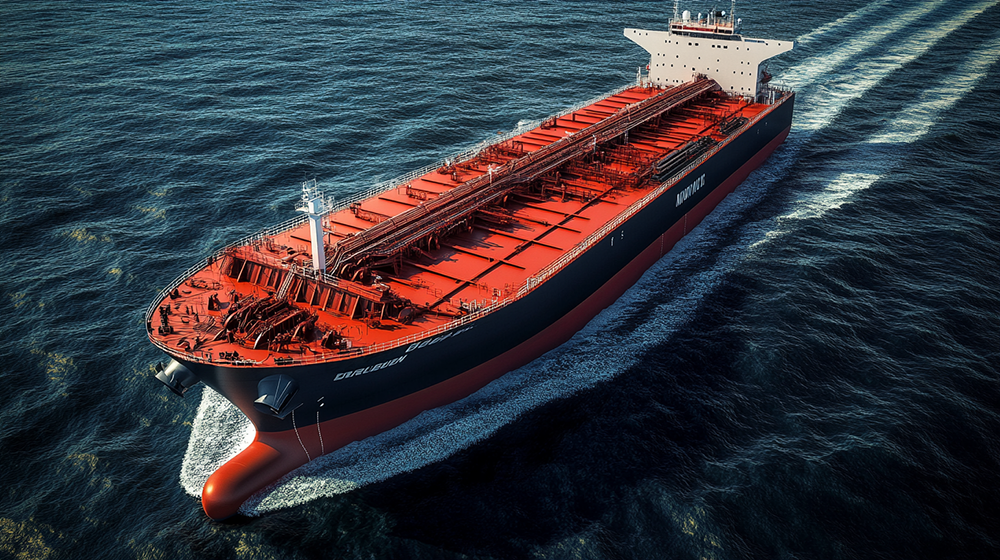
Container ships are 10%-15% more fuel-efficient than bulk carriers.
|
|
Powertrain
|
Low-speed two-stroke engines have higher part-load efficiency.
|
MAN BW Series Optimized Part Load Curve
|
|
Operating environment
|
Ballast conditions reduce draft resistance, while harsh sea conditions increase fuel consumption.
|
Sailing against the current can increase fuel consumption by up to 30%.
|
Industry experience suggests that most ships consume 50%-70% of their full load fuel during cruising. For precise values, please refer to the ship's performance curve (Fuel Consumption Curve).

IV. Conclusions and Recommendations
1. Basic Calculations: Theoretical fuel consumption can be quickly estimated using power equipment parameters, but a correction factor based on actual operating conditions needs to be added.
2. Speed Management: Reducing speed by 10% can reduce fuel consumption by approximately 27%, requiring a balance between sailing time and cost.
3. Data Sources: It is strongly recommended to obtain fuel consumption curves provided by the manufacturer or to install a fuel consumption monitoring system (BWM) to obtain real-time data.
The calculation model presented in this paper is suitable for preliminary estimations. Actual fuel consumption of a vessel is affected by multiple factors such as maintenance status, fuel quality, and crew operation. A dynamic monitoring system needs to be established for long-term operation.