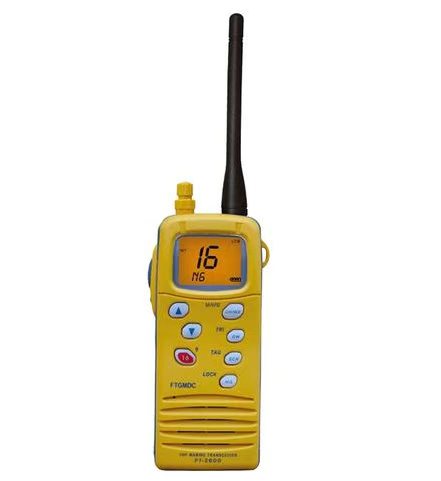
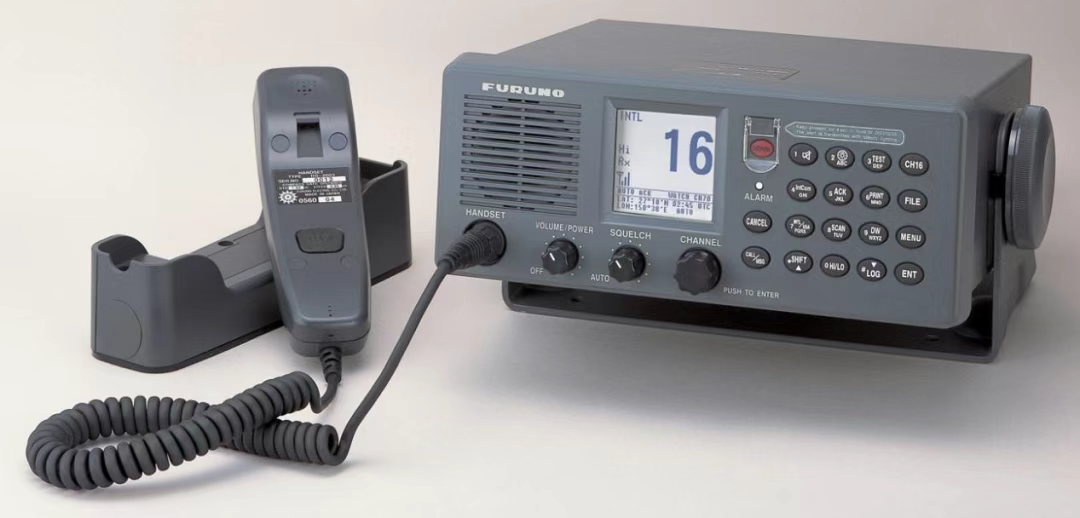
1.Working channels and communication functions of very high frequency (VHF) radiotelephone devices(1) Very high frequency (VHF) is an important part of the GMDSS system and the main equipment for short-range radio communication on the water. The theoretical communication distance can reach 100 nautical miles, but in practice it is about 30 nautical miles. The working frequency band is 156-174MHz. The International Telecommunication Union has a total of 59 channels, VHF channels are 01-28, 60-88, of which 20 are simplex channels, 06, 08-17, 67-77, and the rest are duplex channels, totaling 35, 2 protection channels, and 2 AIS dedicated channels. In simplex communication, both parties transmit alternately, and in duplex communication, both parties can transmit and receive simultaneously. Ships must use the same frequency simplex mode.
(2) VHF radiotelephone is mainly used for port pilotage business, ship dynamic business communication, public communication, bridge-to-bridge communication, and close-range search and rescue coordination communication. It has the following important channels: CH06 can be used for communication between ship radio stations and aircraft radio stations engaged in coordinated search and rescue operations, and can also be used for communication between aircraft radio stations and ship radio stations for safety purposes. CH13 can be used for ship-to-ship communication frequency related to navigation safety. CH16 is a distress safety communication frequency used for radiotelephone (CH75, CH76: are the protection channels of CH16, and transmission is generally prohibited. CH15, CH17: will be forced to work in a low-power state, and the transmission power shall not exceed 1W). VHF DSC has the functions of distress alarm, forwarding, receipt, selective calling, duty, inquiry and ship position reporting. Its dedicated channel is CH70, which is used for distress, emergency, safety and daily DSC calls.
 2. Working channels and communication functions of medium/high frequency (MF/HF) radiotelephone devices
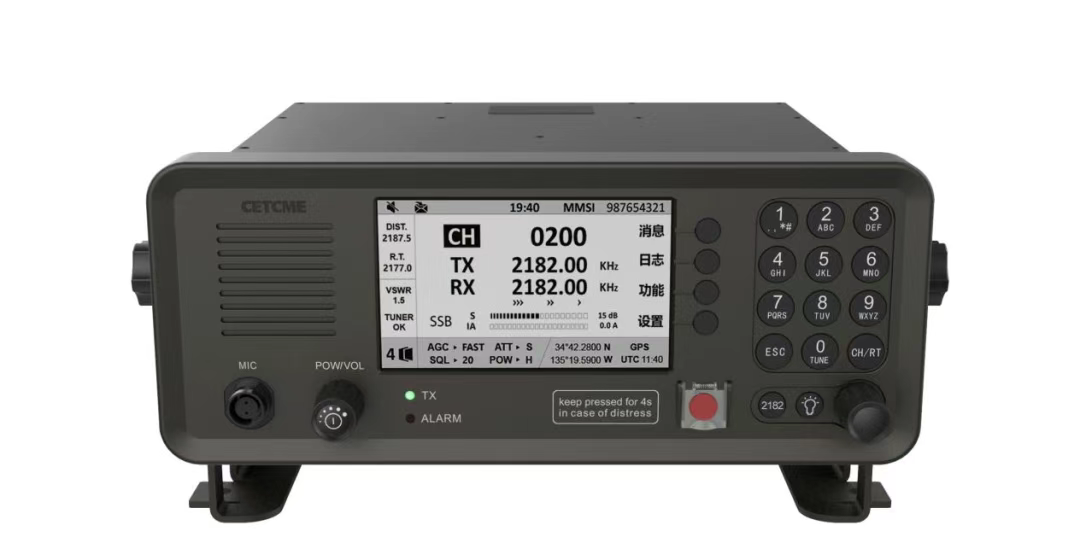
(1) The MF/HF communication system consists of the coast and the berth, and can be used to realize medium and long-distance communication between ships and shores, and between ships. It is an important part of the GMDSS ground communication system. It can be connected with DSC and NBDP terminals to realize distress alarm, on-site communication, MSI reception and daily communication. The communication distance is 100-150 nautical miles, and the communication range increases with the increase of power and frequency. The frequency range is: 1.6-27.5MHz. Transmission type: J3E, H3E, FSK (F1B/J2B). Commonly known as single-sideband SSB or combined radio. Single sideband (J3E): that is, suppressing the carrier and one sideband, namely the upper sideband USB and the lower sideband LSB, and the upper sideband is generally used. Its advantages are narrow bandwidth, high power efficiency, and strong anti-fading ability. Among them, the intermediate frequency 2182kHz is the operating frequency of the international maritime distress radiotelephone, and the working mode is H3E (full-carrier single-channel single-side talk). The HF distress communication frequencies are: 4125kHz, 6215kHz, 8291kHz, 12290kHz and 16420kHz, working mode J3E, and the corresponding DSC working frequencies are: 2187.5kHz, 4207.5kHz, 6312kHz, 8414.5kHz, 12577kHz, 16804.5kHz.
(2) Medium/high frequency radio equipment (hereinafter referred to as MF/HF equipment) consists of medium/high frequency (MF/HF) transceivers and their terminal equipment, including radio telegraph terminals, digital selective calling (DSC) terminals and radiotelephones, etc., and should be able to operate on a single channel or on a single frequency and dual channels, and should include at least one set of DSC dedicated duty equipment for continuous listening on the distress channel. MF/HF equipment should be able to use voice and DSC, NBDP to make the following types of calls: ① distress, emergency and safety communications; ② ship operation requirements; ③ public business communications.
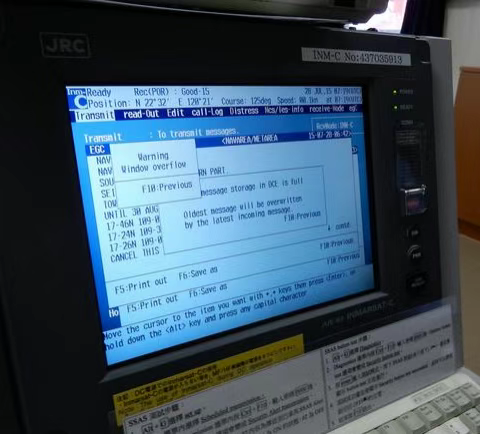
 3. INMARSAT (International Mobile Satellite Organization) Terminal
This is the international maritime satellite terminal that we often hear about, which provides global telephone and data transmission services, including distress alarm functions. The INMARSAT system includes multiple satellites, covering most areas of the world except the two poles.
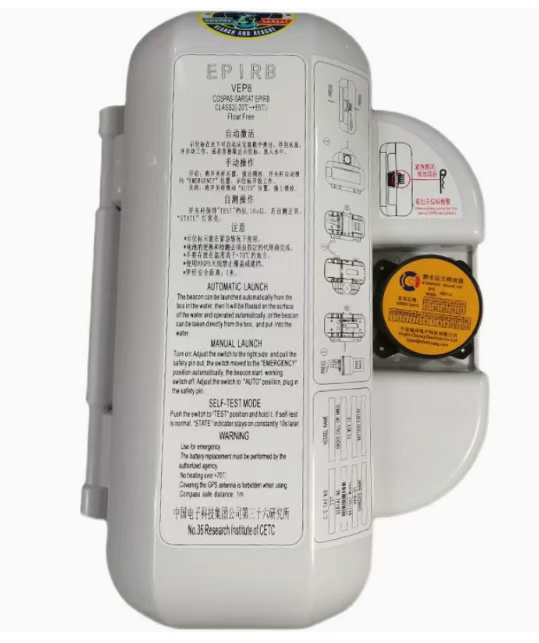
 4. EPIRB (Emergency Position Indicating Radio Beacon)
This is an automatically triggered satellite device that can automatically surface and send a distress signal to the satellite network when a ship sinks in an accident, helping the search and rescue team locate the position of the distressed ship. Because the working frequency at sea is around 406MHz, it is often referred to as 406 alarm.
 5. Purpose and working conditions of SART (Search and rescue radar transponder)
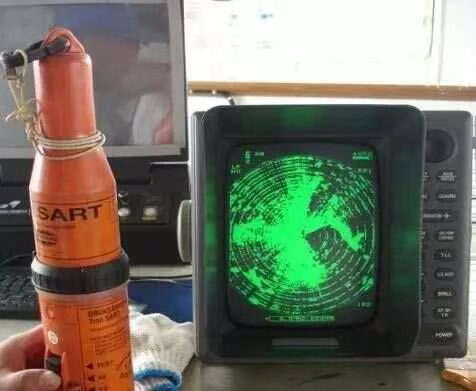
(1) Search and rescue radar transponder (abbreviated as SART) is a positioning device used in GMDSS for search and rescue when a maritime accident occurs. It cooperates with the 9GHz navigation radar installed on the rescue ship or aircraft to form a positioning system, which can solve the limitations of weather, sea conditions, darkness and naked eye visibility during search and rescue, and find the distressed target in time.
(2) When a ship is in distress, the SART is manually turned on and put in standby mode. At this time, no signal is transmitted. When a rescue ship or aircraft passes within a range of 5n mile, the pulse signal emitted by the 9GHz navigation radar installed on it triggers the SART. The SART sweep generator emits 12 equally spaced sawtooth signals, which are sensed by the navigation radar and displayed on the display screen as 12 equally spaced bright spots radiating outward from the center. The first bright spot represents the distance between the SART and the rescue ship. The angle between the bow line and the line connecting the 12 bright spots shown on the display screen is the azimuth. When the target distance is within 1n mile, the bright spots gradually turn into concentric circles.
 6. Navtex receiver transmitter station settings and message format
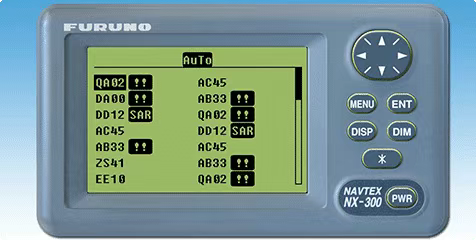
(1) Navtex receivers are used to receive alerts about navigation safety information for coastal ships, including navigation warnings, weather forecasts and other maritime emergency information (MSI). Navtex receiver transmitters have been established in Sanya, Guangzhou, Fuzhou, Shanghai and Dalian, and the system covers the entire coastal area of my country. The operating frequency is 518KHz, and the narrow-band direct printing technology (NBDP) is used for automatic reception and direct printing or storage.
(2) Message format:
ZCZC: message start mark
B1B2B3B4: B1 is the transmitter: Guangzhou is N, Shanghai is Q, Dalian is R, Taiwan is P, Sanya is M, Fuzhou is O, and the transmitter identification B1 is checked from the "National River and Coast Radio Station Registration List". B2 is the message type, among which A = navigation warning, B = weather warning, D = search and rescue information, L = navigation warning (supplement to A), and B3B4 is the message number.
The middle is the message;
NNNN indicates the end of the message sequence.
 7. Portable VHF two-way radiotelephones
For communication between ships and between ships and shore stations. They mainly operate in the VHF band and have a dedicated emergency button that allows quick tuning to the International Distress Channel 16 (156.800MHz) for distress calls.